
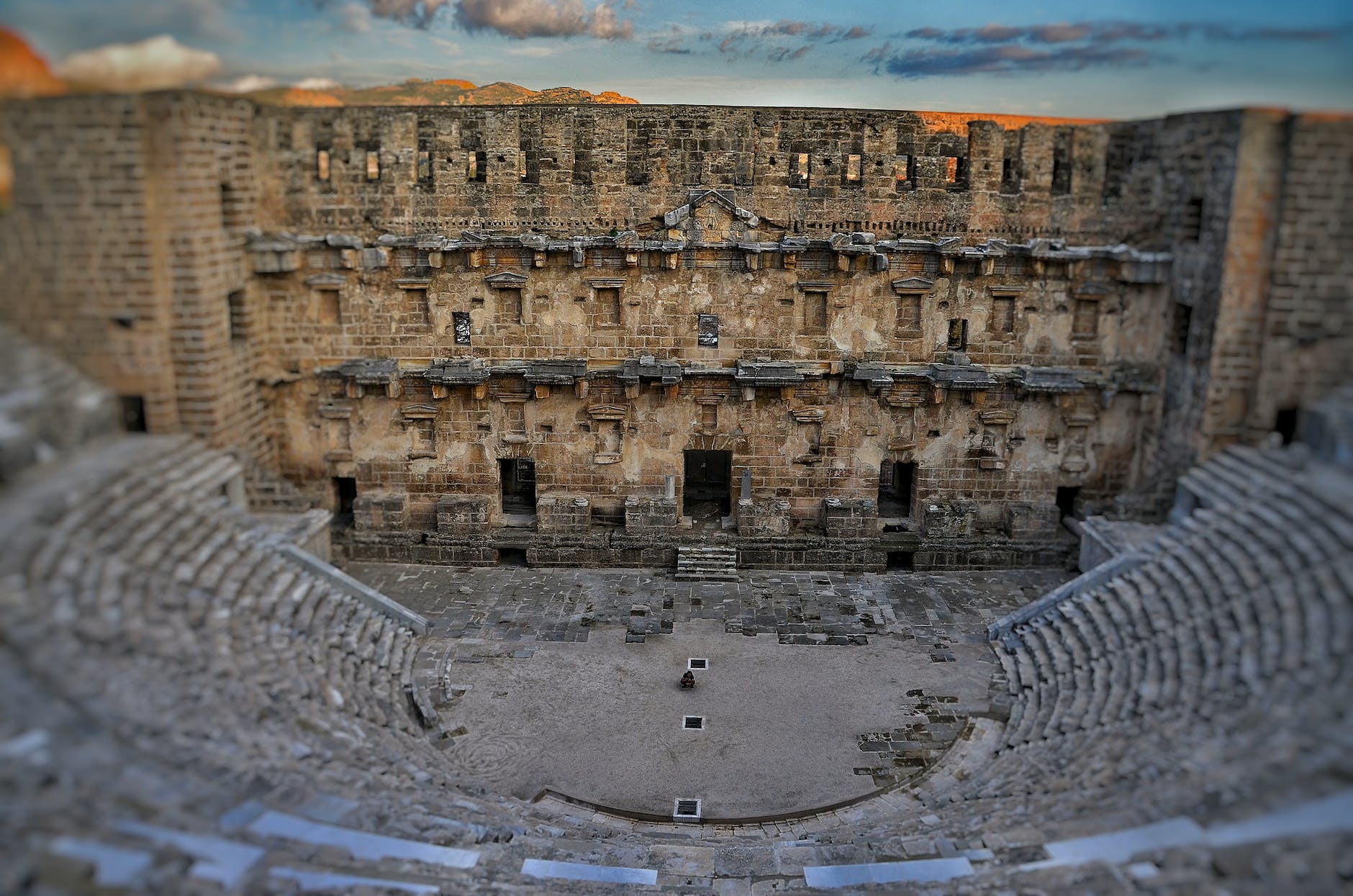
Roman concrete, also known as Opus Caementicium, is a building material that has stood the test of time for over 2,000 years. Despite exposure to harsh environmental conditions like earthquakes, storms, and weathering, many of the structures made from Roman concrete have survived to this day, leaving engineers and scientists in awe of its longevity and durability.
So, what’s the secret to this ancient material’s longevity? Well, let’s dive into the science behind it. Roman concrete was made using a mixture of volcanic ash, lime, and aggregate. This mixture was key to its strength, durability, and reduced cracking compared to other types of concrete used in ancient times.

You see, the volcanic ash, or pozzolan, in the mix reacts with the lime to produce a mineral called tobermorite, which acts as a reinforcement material and helps to strengthen the concrete. In contrast, modern concrete, which typically uses Portland cement, is more prone to cracking and deterioration over time because it lacks the reinforcement provided by tobermorite.
This has led to a growing movement to incorporate some of the principles used in Roman concrete into modern-day construction practices. For example, using a mix of pozzolan and lime in the production of modern concrete can lead to a stronger, more durable, and more sustainable material. In fact, researchers have reported increased compressive strength, improved durability, and reduced carbon emissions when using a mixture of pozzolan and lime in place of Portland cement.

But enough about the science, let’s talk about the potential impact of this rediscovery. Imagine a world where our buildings and structures are not only beautiful but also sustainable and resilient. That’s the promise of Roman concrete. With the principles of Roman concrete, we can create buildings that are not only strong and durable but also environmentally friendly.
Take for example the work of Dr. Paulo Monteiro of the University of California, Berkeley. Dr. Monteiro and his team have been working on the development of “green concrete,” which incorporates the principles of Roman concrete to create a more sustainable and environmentally friendly building material. In a study published in the Journal of Cleaner Production, Dr. Monteiro and his team reported that using a mixture of pozzolan and lime in place of Portland cement led to a reduction of up to 40% in carbon emissions during the production of concrete.

Another example is the work of Dr. Marie Jackson of the University of Utah, who has been studying the properties of Roman concrete and its potential applications in modern construction. Dr. Jackson and her team have found that the use of pozzolan in Roman concrete helped to improve its longevity and durability, and that incorporating these principles into modern concrete production could lead to the development of more sustainable and resilient building materials.
So, what does the future hold for Roman concrete? It’s hard to say, but with experts like Dr. Monteiro and Dr. Jackson leading the charge, the future looks bright (or, at the very least, concrete-y).
Thanks For Reading, Check out more at WhatWhyHow.net
Brandon Cobb, Aka. Darksun22


Leave a Reply