
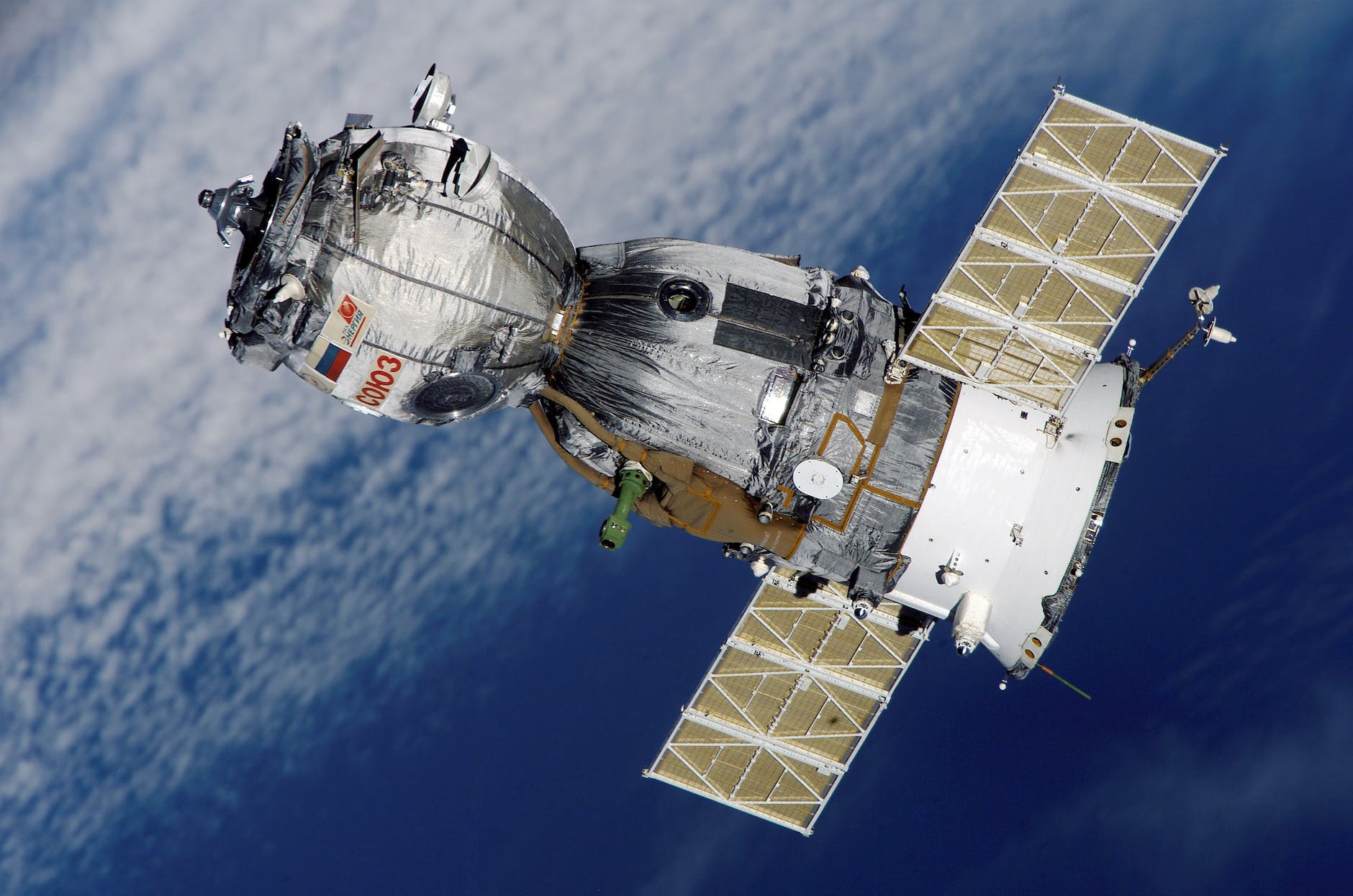
In the upcoming years, humans are set to return to the moon as part of NASA’s Project Artemis. The goal of this ambitious mission is to establish sustainable lunar exploration and pave the way for future missions to Mars and beyond. While the moon may seem like a familiar destination, the technology and capabilities available to us today have advanced significantly since the Apollo missions of the 1960s and 70s. One area where we have seen tremendous progress is in the field of Artificial Intelligence (AI).
AI is set to play a crucial role in the upcoming lunar missions, revolutionizing the way we explore the moon and beyond. From mission planning and optimization, to autonomous systems, improved safety, and data analysis, AI has the potential to be a game-changer for space exploration. In this article, we will dive into the exciting world of AI and lunar missions, exploring how this cutting-edge technology will help us reach new heights and achieve our dreams of exploring the universe.
Mission Planning and Optimization: A Match Made in Space One of the key ways AI will contribute to the upcoming lunar missions is through mission planning and optimization. With its ability to analyze vast amounts of data and provide optimized plans, AI has the potential to revolutionize the way we plan lunar missions. NASA’s Project Artemis, the agency’s effort to return humans to the moon by 2024, will rely heavily on AI to optimize mission planning. This will greatly improve the efficiency of lunar missions, reducing costs and ensuring their success.
Think about it, you’ve got a million things to do before you blast off to the moon – checking your equipment, stocking up on freeze-dried food, and making sure you’ve got the right kind of space-proof shoes. And that’s just the start! But with AI on your side, you can rest assured that the mission planning process will be a walk in the park…well, a walk in a moon-like environment. AI algorithms can analyze data, identify potential risks, and provide optimized plans for the lunar mission, including determining the most efficient flight paths and determining the optimal use of resources. It’s like having a trusty co-pilot, without the constant need for bathroom breaks!
Autonomous Systems: The Future of Lunar Exploration Another area where AI will play a crucial role is in the development of autonomous systems for lunar surface operations. This includes rovers that can perform scientific experiments, identify resources, and collect samples. These rovers can be programmed with AI algorithms that allow them to make real-time decisions and take actions that are best suited for the mission’s objectives. This reduces the reliance on ground control and increases mission efficiency, freeing up astronauts to focus on more critical tasks.
Think about it, you’re on the moon and you need to gather some samples. Sure, you could go and do it yourself, but why risk a spacewalk when you can send in the autonomous rover? With AI at the helm, these rovers can traverse the lunar surface, gather data, and perform experiments without the need for human intervention. It’s like having a loyal robotic sidekick, without the constant need for oil changes.
Improved Safety: AI to the Rescue AI can also be used to improve safety for astronauts on the moon. For example, AI algorithms can be used to detect and avoid hazards in real-time, such as dangerous terrain or incoming meteoroids. According to Professor Massimo Bertozzi of the University of Bologna, AI can be used to “implement new, innovative methods
for monitoring the health status of astronauts and the spacecraft systems, providing early warning of potential issues and reducing the risk of accidents.” This can greatly increase the safety and well-being of astronauts during their mission, and provide peace of mind for mission control back on Earth.
Data Analysis: A Smarter Way to Explore Finally, AI has the potential to revolutionize the way we analyze data from lunar missions. With its ability to process large amounts of data quickly and accurately, AI can be used to analyze data from rovers, landers, and other spacecraft. This can provide valuable insights into the moon’s environment and geology, helping us to better understand the lunar surface and prepare for future missions.
Think about it, you’ve gathered all this amazing data from your lunar mission, but now what? With AI, you can quickly and easily analyze the data to gain a deeper understanding of the moon’s environment and resources. It’s like having a personal scientist, without the constant need for lab coats.
Speculation and Futurism: What’s Next? While AI has the potential to revolutionize the way we explore the moon, it’s also worth considering what other possibilities lie ahead. As AI continues to advance, we may see even more sophisticated autonomous systems, improved data analysis, and safer missions. The future of AI in space exploration is truly exciting and holds endless possibilities.
AI is poised to play a crucial role in the upcoming lunar missions, providing mission planning and optimization, autonomous systems, improved safety, and data analysis. With its ability to analyze vast amounts of data, make real-time decisions, and provide valuable insights, AI is the key to unlocking the secrets of the moon and beyond. So, buckle up and get ready for a journey of innovation and adventure, as AI leads us back to the moon!
As we look towards the future of space exploration, it’s important to remember that we stand on the shoulders of giants. The Apollo missions of the 1960s and 70s paved the way for us to return to the moon, and AI is poised to take us even further. Who knows what discoveries await us on the lunar surface, or what exciting possibilities lie ahead in our journey to explore the universe. The future is truly exciting, and we can’t wait to see what it holds.
In the words of famous astrophysicist and science communicator, Neil deGrasse Tyson, “The cosmos is within us. We are made of star stuff. We are a way for the universe to know itself.” With AI at our side, the universe is truly within our grasp.

Leave a Reply